SANTA CRUZ COUNTY · A VISUAL HISTORY
One corridor.
Decades of
decisions.
Between the coast and our communities lies a remarkable possibility. This is the story of the railroad, the trail, and the future we keep trying to build.
Scroll to explore01 · THE LINE THAT CONNECTED US
Before the debate,
there was a railroad.
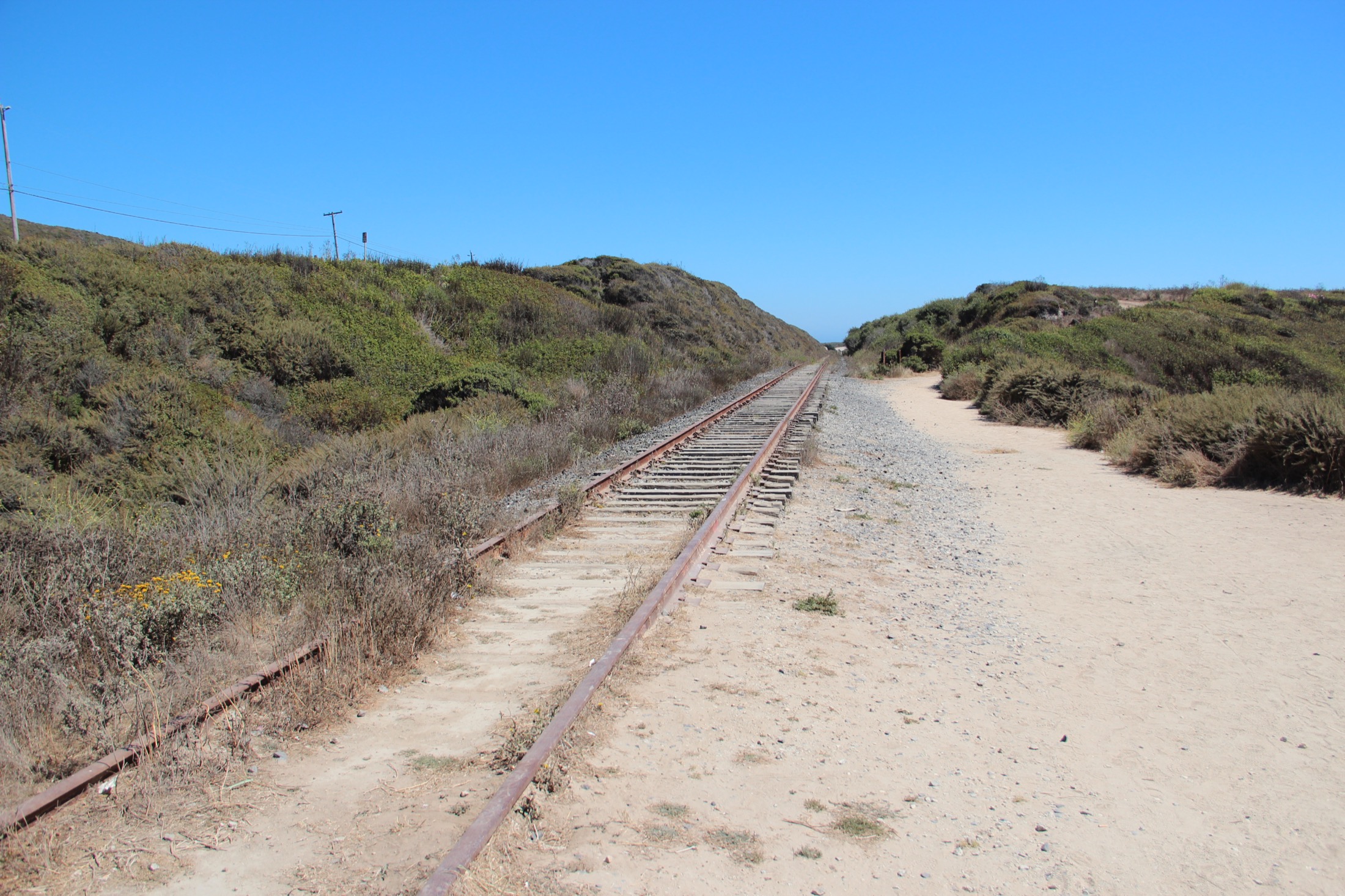
Trains linked Santa Cruz and Watsonville in 1876. The line reached Davenport in 1906, serving a cement plant that would become its dominant freight customer.
02 · A NEW POSSIBILITY
The freight changes.
The promise grows.
Cement production stops in 2009. In 2012, the county’s transportation commission buys the corridor. A future train and a continuous trail now have a publicly owned home.
03 · A TRAIN AND A TRAIL
A shared vision.
A master plan.
The Monterey Bay Sanctuary Scenic Trail Network Master Plan—MBSST—lays out a trail alongside the tracks. A 32-mile Coastal Rail Trail forms the spine of a broader network.
04 · THE TRAIN MIGHT RETURN
Passenger rail
looks possible.
The Rail Transit Feasibility Study supports phased passenger service. Its early planning scenarios put rail capital costs between $31.5 million and $176 million.
05 · A CLOSER LOOK
Then people
walk the line.
Some supporters change their minds after seeing the corridor’s constraints. A professionally commissioned trail study identifies 51 constrained locations. The disagreement becomes tangible: how much room is really here?
06 · THE STUDIES CONTINUE
A new study.
A larger estimate.
The Unified Corridor Investment Study is followed by the Transit Corridor Alternatives Analysis and Rail Network Integration Study. Electric rail is selected. Its business plan estimates $465–478 million, before engineering design.
07 · WHAT THE ENGINEERING REVEALS
The bridges
change the picture.
More detailed work examines the structures a passenger railroad would need. ZEPRT’s bridge assessment recommends replacing 28 existing bridges.
08 · THE SCALE OF THE PROPOSAL
The rail proposal:
$4.28 billion.
The Zero Emission Passenger Rail and Trail Project puts a new scale on the ambition: approximately 22 miles of passenger rail, with associated work. Major trail structures remain outside this estimate.
09 · THE TRAIL FACES ITS OWN REALITY
The trail grows
more expensive, too.
Four mid-county trail segments reach a combined $215 million estimate. Even after cost-saving work and a new federal grant, their funding gap grows to $72 million.
10 · THE STORY IS STILL BEING WRITTEN
What should
the next chapter be?
A continuous trail remains unfinished. Further passenger-rail development is on hold pending funding for more engineering and environmental work. The corridor is still here. So is the possibility.